
Bremerton Directory Runs by Year
The Washington State Library catalog provides the firmest inventory of Bremerton directories. The run is broad but not annual. It begins in 1909, skips several years, becomes much fuller after the early 1960s, and reaches the catalog endpoint in 2009. The public catalog does not identify every publisher imprint or shelf call number, so those details should be confirmed before quoting them. It does show which years warrant a shelf request.
| Historic source | Verified years | Custodian or shelf | How to use it |
|---|---|---|---|
| Bremerton city directories | 1909-1918; 1920-21; 1923-24; 1929-34; 1936; 1938; 1940; 1942; 1946; 1948; 1950; 1952-55; 1957-60; 1962-88; 1990; 1993-2009 | Washington State Library catalog; ask KRL or PSGS about local copies | Name, street, and business listings; regional reach varies |
| Bremerton telephone books | 1941; 1944-50; 1952; 1954-55; 1959; 1961-72; 1975-86; 1988-2003; 2006-07; 2009-11 | State Library catalog and local reference collections | Listed phone and address combinations |
| KRL microfilm | Titles and years vary | Sylvan Way and Bainbridge Island branches | Newspapers and other local records |
| 1904 Sanborn map | Seven sheets | Library of Congress | Block shape, building footprint, use, and construction clues |
A gap between volumes is not proof that a family left Bremerton. Publication was intermittent, and an unlisted phone subscriber may still appear in a city volume or newspaper. Conversely, one entry is only a dated snapshot. Record the title, year, page, community heading, and exact spelling so another researcher can find it again.
Bremerton Directories Cross City Lines
The word “Bremerton” on a volume does not always mean city limits. Early catalog entries include Charleston, Manette, Port Orchard, Port Gamble, Poulsbo, and Retsil. Some later editions reach Allyn, Bainbridge Island, Belfair, Keyport, Kingston, and Silverdale. That regional span is a useful quirk, but it requires care. A name in a Bremerton volume may belong to a household in a nearby postal or community area.
Search the volume’s locality headings and front matter before deciding that two similar names describe one person. A street address, spouse or relative, phone number, and later census record can separate them. When the city label differs from a present map, keep the wording used by the source. Modern city boundaries should not be imposed on an old index.
Bremerton Library Directory Access
The most practical first stop is the Kitsap Regional Library genealogy service. The Sylvan Way branch holds microfilm and provides access to Ancestry Library Edition, FamilySearch affiliate records, and Fold3. The Puget Sound Genealogical Society Center operates there Monday through Saturday from noon to 4 p.m. Its noncirculating collection includes regional books, periodicals, census material, microfilm, microfiche, and research guides.
The State Library’s city directory page says its volumes are for on-site use. Since the Tumwater library closed to normal public access in July 2025, limited appointments are offered Thursdays from 1 to 4 p.m. Email the State Library before making the trip. Locally, ask KRL or PSGS for the exact year and community. Staff can also point to microfilm, an obituary request, or a genealogy-item request when a volume is not on the local shelf.
The KRL genealogy page and access options can be reviewed before a visit.
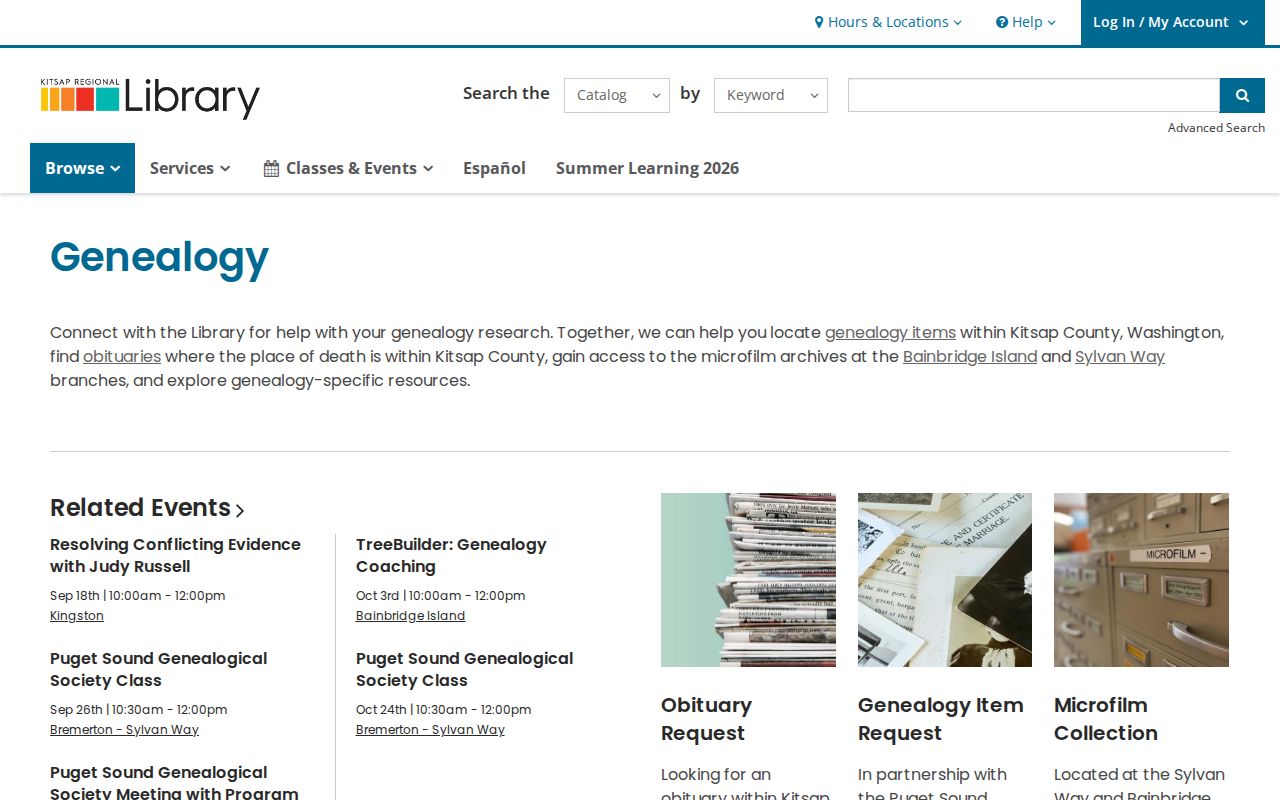
The captured page confirms that the local route includes staff help, databases, microfilm, and partner resources rather than a single open digitized directory.
Note: Call the Sylvan Way branch at 360-447-5480 before visiting to confirm the desired title, year, and access conditions.
Decode a Bremerton Directory Entry
The online catalog proves the holdings, but it does not display a sample page from a local volume. Do not assume that every Bremerton city directory uses the same marks. Inspect the key printed in that exact edition. It may explain shortened street names, initials, spouse references, occupation terms, and symbols. Copy the entry as printed before expanding any abbreviation.
| Name | Record the surname, given name, initials, and any spouse text exactly as printed. |
|---|---|
| Work detail | Note an occupation or organization only when the entry prints it. |
| Address | Keep the house number, street spelling, and residence or boarding mark. |
| Telephone | Later phone books may supply a number that helps distinguish same-name entries. |
| Status mark | Confirm widow, owner, renter, or householder symbols against that volume's key. |
- Criss-cross directory
- A street or address arrangement that points back to a listed name.
- Householder index
- A list focused on the person recorded as the household's principal listed adult.
- Abbreviation key
- The volume's own legend for its shortened words and symbols.
Bremerton Telephone Directory Trail
Telephone books form a separate trail. Their verified Bremerton holdings reach from 1941 through 2011 with many gaps. A telephone listing may pair a name, address, and phone number, while a city volume may add a business listing or another adult in the household. Neither source includes everyone. People without listed service, recent arrivals, and some members of a shared home can be absent.
Check the catalog description for the communities included in each book. Preserve the printed exchange and number as a time marker, not a current contact. If a name appears in one source but not the other, test adjacent years and newspaper microfilm before inferring a move.
Trace Families in Bremerton Directories
A careful search moves backward from a known year and lets each dated item support the next. Public federal census schedules are available through 1950 under the 72-year rule. They capture a household on one census date, while city directories can fill some years between censuses.
- Choose the newest available volume before the target date. Search the surname and record every matching entry.
- Check the street or reverse section, if the exact volume has one. Note other listed names at the address.
- Move to the next older volume. Test initials, spouse names, nearby streets, and spelling changes.
- Compare the nearest public census year. Treat it as a snapshot, not an exact move date.
- Close a gap with KRL newspaper microfilm, an obituary request, a deed, or a probate file.
If a household vanishes, several explanations remain possible. It may have moved, declined a listing, changed the listed name, or fallen into a missing year. For present address-keyed research, the Bremerton street directory workflow leads from a parcel to current records without rebuilding the historical shelf.
Bremerton Directory Place-Name Timeline
Local history explains many failed searches. Bremerton grew from separate settlements and later city boundaries. A family did not have to move for its place label to change. Test old town and regional headings alongside the current city name.
| Date | Directory-search context |
|---|---|
| 1863 | Captain William Renton's settlement near present-day Manette begins the local place-name trail. |
| 1891 | William Bremer plats Bremerton; Port Orchard No. 2 is also platted. |
| 1901 | Bremerton incorporates. |
| 1903 | Port Orchard No. 2 takes the name Charleston. |
| 1909 | The verified State Library city-directory run begins. |
| 2009 | The cataloged city-directory run ends, though that is not confirmed as the final volume ever printed. |
The Navy Yard and shipyard drew sharp population change. Compare directory, deed, permit, and census dates as separate points. Local growth is context, never proof that a named person lived at a certain place.
Map Bremerton Directory Addresses
The 1904 Bremerton Sanborn map has seven free public-domain sheets. It can show a block's street pattern, building footprint, construction, and use. It names no occupants. Pair a map location with the 1909 or later directory entry, a census schedule, and a deed or plat before drawing a household conclusion.
For a broader visual archive, the Kitsap History Museum collection reports more than 40,000 artifacts and textiles, over 100,000 photos and images, and extensive county documents.
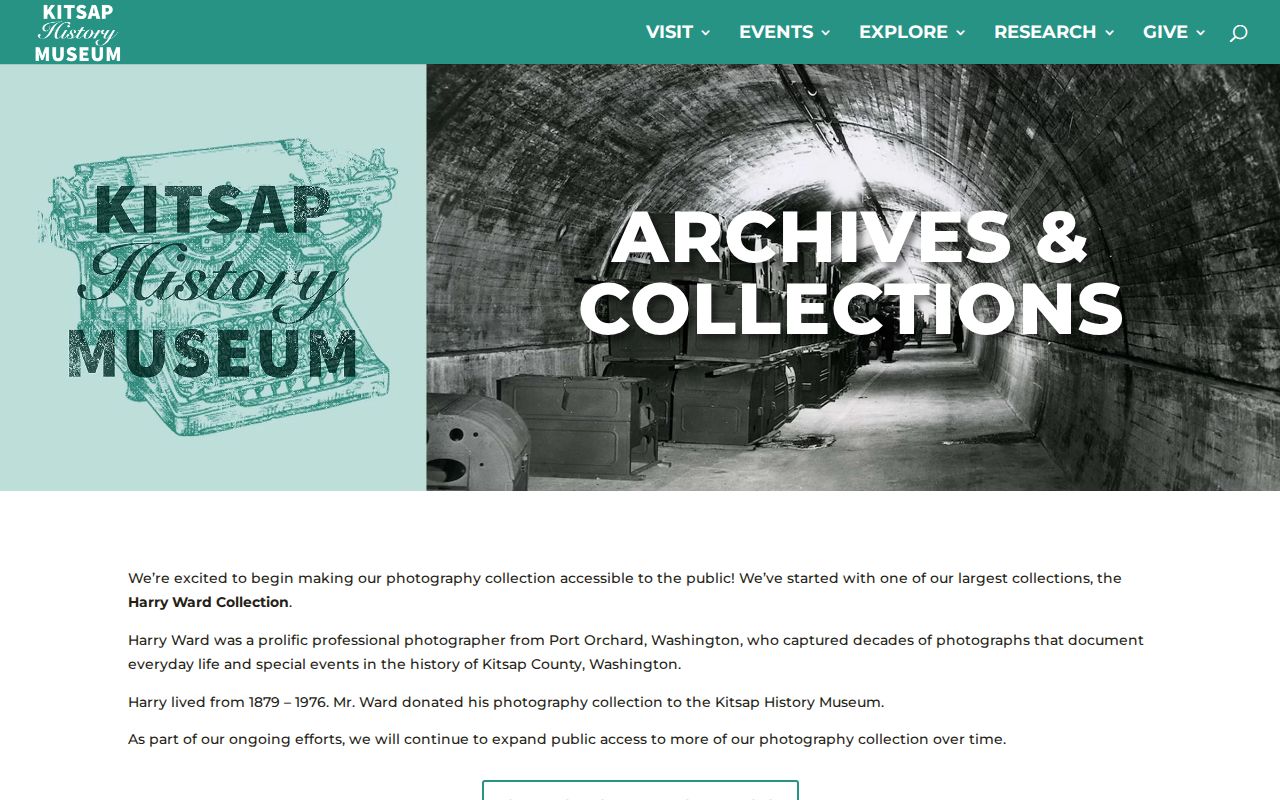
The museum can supply visual and civic context for a street, business, shipyard area, or community event, while the directory and official records support the name and date.
Photographs work best when their labels are preserved. Record the collection name, item identifier, photographer when given, date estimate, and the museum's description. Then compare visible storefronts, street names, shorelines, or public buildings with a dated map. Harry Ward's photography collection is a useful Kitsap lead, but a caption can still describe Port Orchard or another county place. The source label should decide the geography.
Bremerton Directory Research Beyond Shelves
Not every useful local record is digitized. KRL offers obituary and genealogy-item requests. PSGS volunteers can help interpret regional holdings. The Puget Sound Regional Archives serves Kitsap County and may hold transferred local-government records. Ask an archivist about naturalization, probate, cemetery, school, military, or poll-book material when the known name and date do not appear online.
Washington Digital Archives supplies a separate bridge. Its Kitsap marriage collection is described as covering 1860 through 2014 and contains 153,158 records. Land records and selected court files can add dates and related names. These are not city directory substitutes. They help test whether two entries refer to the same family and explain a change that the printed sequence alone cannot resolve.
The Kitsap marriage collection search shows the fields available before a historical Bremerton name is entered.
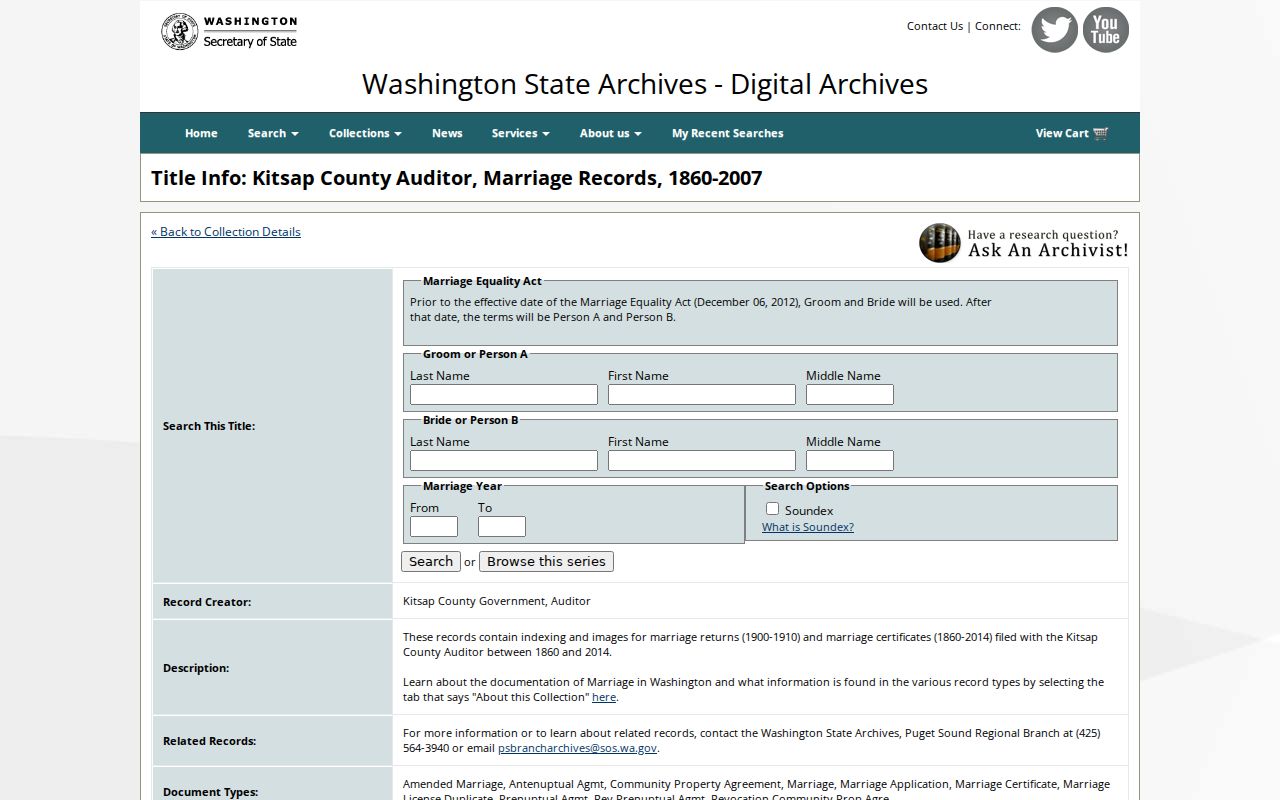
The collection can confirm an event and related name, while the city directory remains the source for a household's printed address in a given volume.
Use the Digital Archives name fields and year range to test a likely match, then save the record identifier and image status. A marriage index may add two names, dates, and a document number. It does not prove where either person lived on every date. For records outside the online run, contact the Puget Sound Regional Archives or the original county custodian and describe the name, place, approximate year, and record type. A focused request gives staff enough detail to check an offline index without pretending that every local collection is searchable from home.